RTP, Variance and the Truth About Slot Math
Every slot player has heard the phrase "this machine is due." It is possibly the most expensive sentence in gambling, right up there with "I'll stop after one more spin." The uncomfortable truth is that slot machines do not have memories. They do not care whether you have lost nine spins or nine hundred. Understanding why is the first real step from playing slots to actually understanding them.
The Random Number Generator Never Sleeps
Modern slots are driven by a random number generator, or RNG. This isn't a gimmick invented to fool players; it's a certified piece of software audited by independent labs like eCOGRA, GLI, and BMM Testlabs. The RNG generates thousands of numbers per second, and the moment you press the spin button, it grabs whichever number is current and maps it to a position on the reels. That mapping is fixed. The odds on a given spin are identical to the odds on the spin before it and the spin after it. For a closer look, L'Avenue Dubai has helpful details.
This is why the concept of a "hot" or "cold" machine is a myth. A slot that just paid out a jackpot is statistically just as likely to pay out again on the next spin as it was on the spin that triggered the jackpot. Casinos love this myth because it keeps players feeding machines that they believe are overdue. The machine has no calendar, no mood, and no sense of justice.
RTP: What the Number Actually Means
Return to player, or RTP, is the percentage of all wagered money that a slot returns to players over the long run. A 96% RTP means that for every $100 wagered across millions of spins, the machine returns about $96 and keeps $4 as house edge. That is not a per-session promise. You can deposit $200 and lose all of it on a 97% RTP slot with perfectly fair RNG behavior.
RTPs vary far more than most players realize:
- Online slots: typically 94% to 97%, with some reaching 98% or more
- Land-based slots in the US: often 85% to 92%, sometimes lower in some jurisdictions
- Progressive jackpot slots: often 88% to 94%, with the missing percentage funding the jackpot pool
That gap is staggering. A 92% RTP machine has an 8% house edge; a 96% machine has 4%. On $10,000 of total wagering, the difference is $400 in expected loss. Choosing higher RTP slots is one of the few decisions a player actually controls.
Variance: Why Two Slots With the Same RTP Feel Totally Different
Variance, or volatility, describes how the payouts are distributed. A low-volatility slot pays small amounts frequently. A high-volatility slot may pay nothing for 200 spins and then deliver a 500x win. Both can have identical 96% RTPs. The difference is the ride, not the destination.
This matters because your bankroll is finite. On a high-variance slot, a $100 bankroll at $1 per spin may vanish before the bonus ever triggers. On a low-variance slot, the same $100 might last an hour with steady small wins. Neither is better; they suit different comfort levels and different session goals. If you want to play for two hours on a $50 budget, chasing a 10,000x max win slot is simply mismatched strategy.
Reading the Fine Print
Reputable online casinos publish RTP and sometimes volatility data in the game info panel. If a casino hides RTP entirely, that's a red flag. Some operators even run the same slot at different RTP settings depending on jurisdiction, which is legal in many markets. The identical looking game can be 96% on one site and 94% on another. Always check.
Poker: A Different Animal Entirely
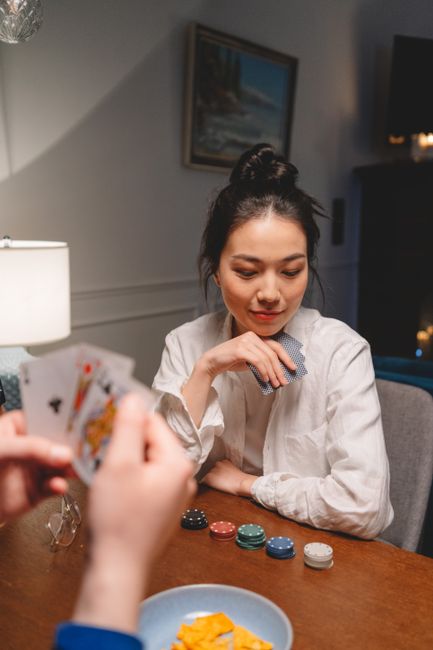
Poker is the exception in the iGaming world because it is not played against the house in the same way. In cash games, the casino takes a rake, typically 5% capped at a few dollars per pot. Your long-term results depend on decisions, not RNG.
That said, poker is not free of variance. A solid player can lose for 50,000 hands due to bad luck. The edge in poker is real but thin: a strong cash game player might win 2 to 5 big blinds per 100 hands over a large sample. That means variance can mask skill for a very long time. Tournament poker is even more extreme; win rates are measured in thousands of tournaments, not hundreds.
Tips that separate winning and losing poker players:
- Track every session. Without data, you are guessing.
- Play within your bankroll: at least 20 buy-ins for cash games, 50 for tournaments.
- Study ranges, not just your own cards. Position beats hand strength more often than most players admit.
- Accept that folding is a skill. Most hands should end with you folding.
Betting Markets: Where Information Is the Edge
Sports betting is closer to poker than to slots because the bookmaker sets odds based on probability estimates, and sharp bettors exploit mispricings. The house edge is baked into the margin between the two sides of a market. On a typical NFL spread with -110 on both sides, the implied house edge is about 4.5%. In some markets, like obscure soccer leagues, that margin can balloon past 10%.
Smart bettors focus on a few things:
- Line shopping across multiple books. A half-point difference in spread can flip a losing bet into a winning one over a season.
- Betting early, when lines are softer, rather than chasing late steam.
- Ignoring accumulators. Parlays multiply the house edge with each leg.
- Bankroll discipline: flat betting 1% to 2% per wager protects against the inevitable cold streak.
Live betting has changed the landscape, but it also favors the operator, who updates odds faster than any human can react. Unless you have a genuine information edge, live markets are among the toughest to beat.
The One Common Thread
Whether it's slots, poker, or sports betting, the theme is the same: the house edge is patient, and variance is loud. Over a short session, luck dominates. Over a year, the math always wins. The players who survive and occasionally thrive are the ones who accept that the only variables they control are the games they choose, the stakes they play, and the discipline they bring to the table. Everything else is noise.
So the next time someone tells you a slot is "due for a payout," you can smile and politely explain that it has no idea who you are. Then go find a 97% RTP game instead.